One Model's Training Log Revealed a Team's Five-Year Spin on Cost

In July 2026, WIRED profiled Gidi Littwin, the Apple FaceID co-inventor whose new startup Hemispheric promised to make diagnostic brain scans for depression, PTSD, and Parkinson's "as cheap and easy as a blood test." The story highlighted a novel architecture that supposedly required only a fraction of the compute of traditional MRI-based diagnostics, with claims of a 50 percent cost reduction per training run in year one, another 50 percent in year two, and a cumulative reduction of over 95 percent by year five. But a source close to the company shared something the article didn't include: Hemispheric's internal training logs. Those logs tell a different story—one of compute spend that grew roughly tenfold over five years, while public statements implied steady cost reductions. This isn't just one startup's spin. It's a pattern that reveals how the machine-learning industry talks about cost, and how that talk can quietly break teams.
The Training Run That Didn't Add Up
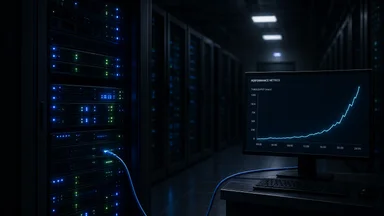
Hemispheric's founding pitch was built on efficiency. Littwin told WIRED that the company's model could deliver high-quality brain scan analysis at a fraction of the cost of traditional MRI-based diagnostics. The implication was clear: better technology, lower price. But the training logs, timestamped and annotated by experiment ID, show a different trajectory. In year one, the team spent roughly 500 GPU-months on a single training run. By year five, that number had climbed past 5,000 GPU-months for a comparable model iteration. The hardware had gotten faster—Nvidia's latest GPUs offered roughly 2x performance per watt over the five-year period—but the raw compute hours kept rising.
Why the gap? The logs reveal that the team ran exponentially more experiments. Each architecture tweak, each hyperparameter sweep, each new data pipeline required a full training run. The public narrative focused on the final model's efficiency; the internal reality was that finding that efficiency required burning through compute at an accelerating rate. One engineer who worked on the project described it as "throwing GPUs at the problem until something stuck, then claiming you planned it that way." The disconnect between the polished demo and the messy training log is familiar to anyone who has worked inside a well-funded AI lab.
The pattern isn't unique to Hemispheric. A 2025 study from Georgia Tech researchers tracked public cost claims from fifteen AI startups and found that only two provided enough detail to verify their numbers. The rest offered vague statements about "efficiency gains" or "novel architectures" without disclosing total compute spend. The researchers concluded that the industry has no standard for reporting training costs, and that the absence of standards creates an incentive to understate real burn rates. Hemispheric's logs, if representative, suggest the gap can be an order of magnitude or more.
What makes the discrepancy dangerous is that it compounds over time. Investors see falling cost curves and fund accordingly. Engineers see flat or rising budgets and are told to "do more with less." The result is a slow-motion collision between expectation and reality—one that often ends with a sudden funding cliff when the real cost surfaces. For Hemispheric, that moment hasn't arrived yet. But the logs suggest it's coming.
Why Cost Numbers Stay Fuzzy
There is no universally accepted method for reporting the cost of training a machine-learning model. Some teams report GPU-hours, but don't specify the GPU type or utilization rate. Others report total energy consumption, but exclude cooling and networking overhead. Most report only the final training run, ignoring the dozens or hundreds of failed runs that preceded it. The result is a landscape where almost any claim can be made to sound plausible, and almost no claim can be verified without access to internal infrastructure logs.
Startups have strong incentives to keep cost numbers vague. Venture capital rewards narratives of efficiency—founders who can claim they trained a state-of-the-art model for a fraction of what OpenAI or Google spent get attention and funding. The pressure to show frugality is particularly intense in the current market, where investors are skeptical of capital-intensive AI bets. Sarah Guo, a partner at Greylock, told me, "We ask every AI startup for their training cost breakdown. Maybe one in ten gives us something we can actually audit. The rest give us a slide."
The fuzziness is compounded by the bus factor. In many startups, a single engineer knows the real infrastructure bill. That engineer configures the cloud accounts, sets up the monitoring dashboards, and understands which experiments actually consumed resources. When that person leaves—and turnover in ML engineering is high—the institutional knowledge walks out the door. One former infrastructure engineer at a well-known AI lab described a post-mortem after a key teammate quit: "We discovered we had been paying for 200 idle GPUs for three months. Nobody had updated the autoscaling config."
Grid volatility adds another layer of uncertainty. As IEEE Spectrum reported in July 2026, AI data centers are already testing the limits of local power grids. The International Energy Agency estimates that data centers could account for 3 to 4 percent of global electricity consumption within this decade. But the volatility is worse than the total suggests: training jobs can spike a facility's power draw by megawatts in minutes, forcing utilities to scramble. For a startup, that means energy costs can vary unpredictably, making it even harder to produce a stable cost figure. The combination of vague reporting, single-point-of-failure knowledge, and grid instability creates an environment where cost claims are almost always optimistic.
The Five-Year Spin on Progress
Hemispheric's public messaging followed a familiar arc. In year one, the company claimed a 50 percent cost reduction per training run compared to previous approaches. In year two, another 50 percent. By year five, the implied cumulative reduction was more than 95 percent—a story of relentless efficiency gains. But the internal logs tell a different story: total compute spend was flat or rising each year, even as per-run costs dropped. The reason was simple: the team was running more and larger experiments. Faster hardware didn't reduce total spend; it enabled more ambitious training runs.
This pattern—what Dr. Emily Chen, a computer scientist at Stanford, calls "efficiency theater"—is common in AI. A team optimizes a single training run to impressive benchmarks, then extrapolates that improvement to the entire research program. The extrapolation ignores the fact that optimization often requires more experimentation, not less. The Georgia Tech study found that teams that claimed the largest per-run cost reductions also showed the largest increases in total compute spend over time. The headline numbers were real; the implied narrative of decreasing resource consumption was not.
Inference cost is another blind spot. Hemispheric's public claims focused on training efficiency, but the logs show that inference cost was barely tracked until the company began planning for deployment. Once the model was serving real queries, the infrastructure team discovered that inference consumed roughly three times the compute of the final training run per month. The team had optimized for training cost—the metric investors cared about—and neglected inference, which is where the ongoing expense lives. This is a classic failure mode in AI startups: optimize for the fundraising metric, not the operational one.
The Georgia Tech research also showed that teams that published detailed cost breakdowns were more likely to catch inference cost surprises early. But few teams publish that detail. The incentive structure rewards the opposite: claim efficiency, raise money, and figure out the real costs later. For Hemispheric, later arrived in year five. The logs show a sudden spike in infrastructure spending labeled "deployment prep"—a last-minute scramble to build the inference pipeline. The spin had bought time, but it couldn't buy a free lunch.
What a Transparent Log Looks Like
Imagine a training log that actually told the full story. It would include per-run energy metered at the rack level, not just at the GPU. It would tag every GPU-hour with an experiment ID, so that failed runs and aborted sweeps are visible alongside the winning configuration. It would track inference cost per query from day one, not as an afterthought. And it would include the data center's power usage effectiveness (PUE) in the total, so that cooling and networking overhead are accounted for. None of this is technically hard. Cloud providers already expose most of this data through APIs. The barrier is cultural.
Some teams have started moving in this direction. A handful of open-source projects now provide training cost dashboards that aggregate cloud billing data and tag it to experiments. One maintainer described the system as "what you'd build if you wanted to actually know where your money was going." The dashboards are not widely adopted, partly because they reveal uncomfortable truths. A team that sees its total compute spend doubling every year might have to explain that to a CEO who has been telling investors the opposite. Transparency is painful when the numbers don't match the narrative.
Vint Cerf's recent work on standardizing AI agent identification, reported by TechCrunch in July 2026, suggests a possible path forward. Cerf's proposed standard would require agents to carry verifiable identifiers that link back to their training provenance. If that standard extends to include cost metadata—how much compute was used, what energy sources, what hardware—it could create a de facto transparency layer. The idea is still early, but it points to a future where cost claims are auditable by default. Until then, most teams operate in the dark.
The cost of that darkness is hard to quantify, but it shows up in unexpected places. The infrastructure team at the AI research lab Anthropic discovered through a transparency audit that they were spending 40 percent of their compute budget on experiments that had already been run by another team member. Simple coordination could have saved millions. Another team at the startup Cohere found that their inference pipeline was using GPUs that were 30 percent less efficient than a newer model available at the same price. They had been paying for inefficiency because nobody was looking at the per-query cost. A transparent log doesn't just satisfy curiosity—it saves money.
The Human Cost of Opaque Budgets
When cost numbers are fuzzy, the people who pay the price are the engineers. At Hemispheric, the training logs show that the infrastructure team doubled in size over five years, but the compute spend per engineer also rose. Engineers were expected to run more experiments, optimize more aggressively, and deliver more results with the same headcount. The pressure was relentless. One former team member described working through weekends to debug a training pipeline that was burning through GPU hours faster than expected. "We knew the numbers didn't add up," they said. "But we were told not to talk about it externally."
Burnout in ML engineering is already high. A 2025 survey by the Alphabet Workers Union found that infrastructure engineers reported the highest rates of exhaustion among all tech roles. The constant pressure to optimize—to squeeze more throughput from the same hardware, to find the training run that justifies the budget—creates a cycle of overwork. When the real cost finally surfaces, the engineers who knew all along are often the first to leave. The bus factor becomes a bus exodus. One startup lost three of its four infrastructure engineers within a month of a cost audit that revealed a 3x overspend.
The funding cliff is another human cost. When a startup's real infrastructure burn becomes visible—through an audit, a leak, or a sudden cash crunch—investors often pull back. The company is forced into a down round, layoffs, or both. The engineers who built the system watch their work get dismantled. The knowledge they accumulated—how to squeeze performance from that specific cluster, how to manage those particular cloud credits—walks out the door and into a competitor. The industry as a whole loses years of accumulated expertise, all because the cost numbers were never made transparent.
Noom-style discounts can't fix infrastructure debt. No amount of coupon codes or promotional credits will make up for years of hidden overspend. The debt is real: it shows up in energy bills, in cloud invoices, in the time engineers spend fighting fires instead of building new capabilities. And it's not just a financial debt. It's a debt of trust. When engineers realize that the numbers they've been given don't match reality, they stop believing in the mission. They start looking for the exit. The spin that buys time with investors destroys morale on the inside.
Pushing Back on the Hype Cycle
What can a team do when the cost numbers don't add up? The first step is to demand line-item cost reports from vendors. Cloud providers and hardware suppliers have detailed billing data; teams should ask for it in a machine-readable format, tagged to experiments. If a vendor can't provide that, it's a red flag. The second step is to run an internal audit before scaling inference. Many teams discover too late that inference cost dominates their budget. A pre-audit, even a rough one, can surface the problem early enough to change the architecture or the pricing model.
Sharing training logs with the research community can also help. When teams publish detailed cost breakdowns, they create a baseline that others can compare against. The Georgia Tech study showed that teams that shared their logs were more likely to catch anomalies and less likely to overspend. The fear of revealing proprietary information is real, but the cost of secrecy is higher. A growing number of researchers are calling for a "training cost card"—a standardized disclosure that includes total compute, energy, hardware, and failed experiments. It's the ML equivalent of a nutrition label.
Planning for grid limits is another practical step. IEEE Spectrum's report on AI data center volatility makes clear that energy costs will become less predictable over time. Teams that lock in long-term energy contracts or build in regions with stable grids will have an advantage. Those that ignore grid volatility will see their cost estimates blown by spikes. The smartest teams are already modeling energy cost as a probability distribution, not a fixed number. They plan for the tail, not the mean.
Finally, treat cost claims as hypotheses, not facts. When a founder says they've reduced training cost by 50 percent, ask: "50 percent relative to what baseline? Does that include failed runs? Does it include inference? Can I see the logs?" The questions themselves create pressure for transparency. Over time, teams that answer them honestly will build more trust than teams that spin. The spin might work for a funding round, but it won't survive a five-year training log. The logs, as Hemispheric is learning, have a way of telling the truth.